THE SLEEP HEALTH REVIEW
50% OFF · 2 FREE GIFTS · FREE SHIPPING · 60-NIGHT MONEY-BACK GUARANTEE
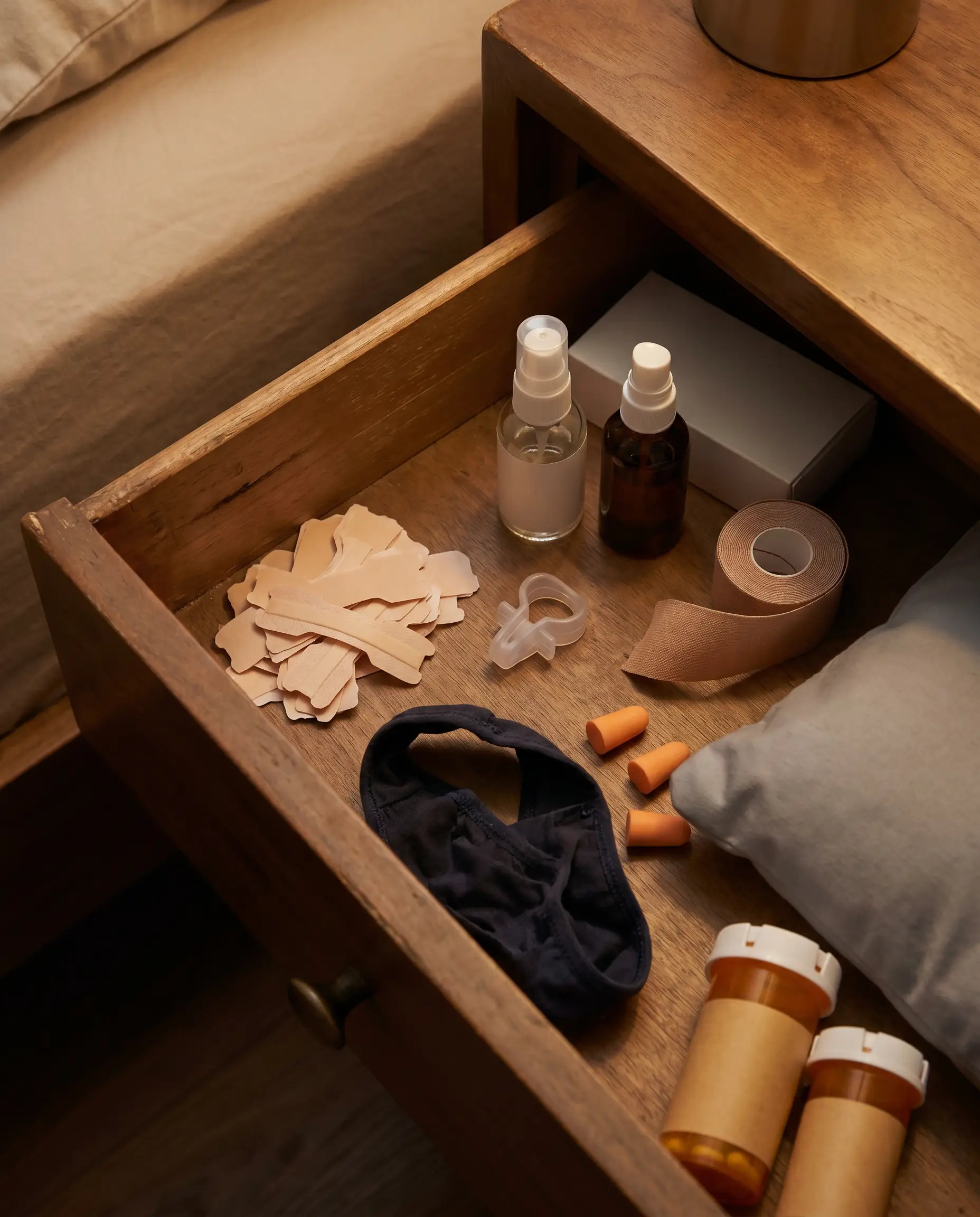
A Dental Sleep Specialist Exposes: Why Every Snoring “Fix” in Your Drawer Was Doomed to Fail
Most anti-snoring products fail for the same reason, and it isn't the one you'd guess.
★★★★★ 4.7/5 · Trusted by 10,000+ verified customers

I'm a dentist who works in dental sleep medicine. That means I spend my days treating snoring and the airway problems behind it.
Here's what years of it have taught me. The problem is almost never that a patient hasn't tried enough products. It's that nearly everything sold for snoring is aimed at the wrong part of the body.
Snoring is actually very well understood. The mechanism behind it has been documented for decades. And once you understand that mechanism, it becomes clear which fixes can't work, and which one can.
Let me walk you through it the way I would with a patient.
What's Really Happening When He Snores
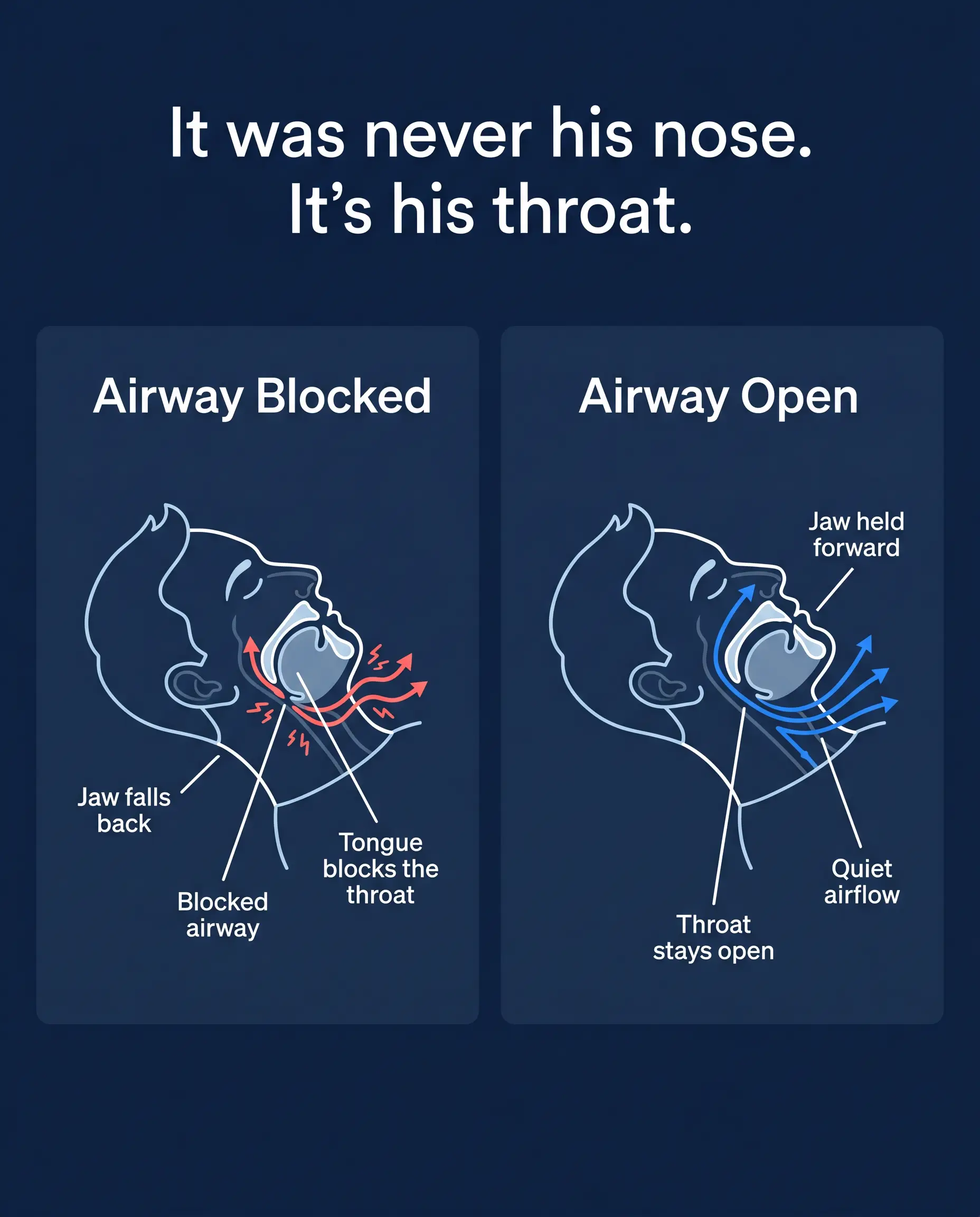
Snoring is an upper-airway problem, and it's more specific than just “he's loud.”
When your husband drifts into deep sleep, the muscles that hold his airway open begin to relax. That includes the soft tissue at the back of the roof of his mouth and the base of his tongue. As those muscles go slack, his lower jaw settles backward, and the base of his tongue falls back along with it. The space behind his tongue narrows until there's almost no room left for air to pass.
Now here's what actually creates the sound. As he breathes in through that narrowed space, the fast-moving air causes a drop in pressure that pulls the walls of his throat inward. The loose, relaxed tissue begins to vibrate as air forces its way past it. That vibration is the snore.
So in clinical terms, snoring is not a nasal problem. It is a soft-tissue airway problem, and it originates in the throat. That one distinction is the reason almost everything sold for snoring is pointed at the wrong target.
Why the Things in Your Drawer Never Worked
Once you know the sound comes from a collapsing throat, the failures make sense. I hear the same list from patients every week, so let me be honest about each one.
- Nasal strips and nasal dilators open the nostrils. But the collapse is in the throat, behind the tongue, nowhere near the nose. They can make his nose feel clearer and do nothing about the snore.
- Throat and nasal sprays are meant to coat and “lubricate” the tissue. They don't stop the jaw and tongue from falling backward, so for most people the effect is small and short-lived.
- Mouth tape seals the lips to force nose breathing. It doesn't address the airway collapse at all, and many patients tell me it makes them feel like they can't breathe.
- Earplugs and noise-canceling headphones don't treat him. They try to muffle the sound for you. That's why you can wear earplugs under headphones and still hear him through the wall.
- Wedge pillows, anti-snore pillows, and rolling him onto his side can help for a few minutes by shifting his head. Then he settles onto his back and the airway collapses again.
- Sleep aids (melatonin, and stronger prescriptions like trazodone) may help you or him fall asleep, but they don't fix the airway, and some actually relax the throat muscles further and make the snoring worse.
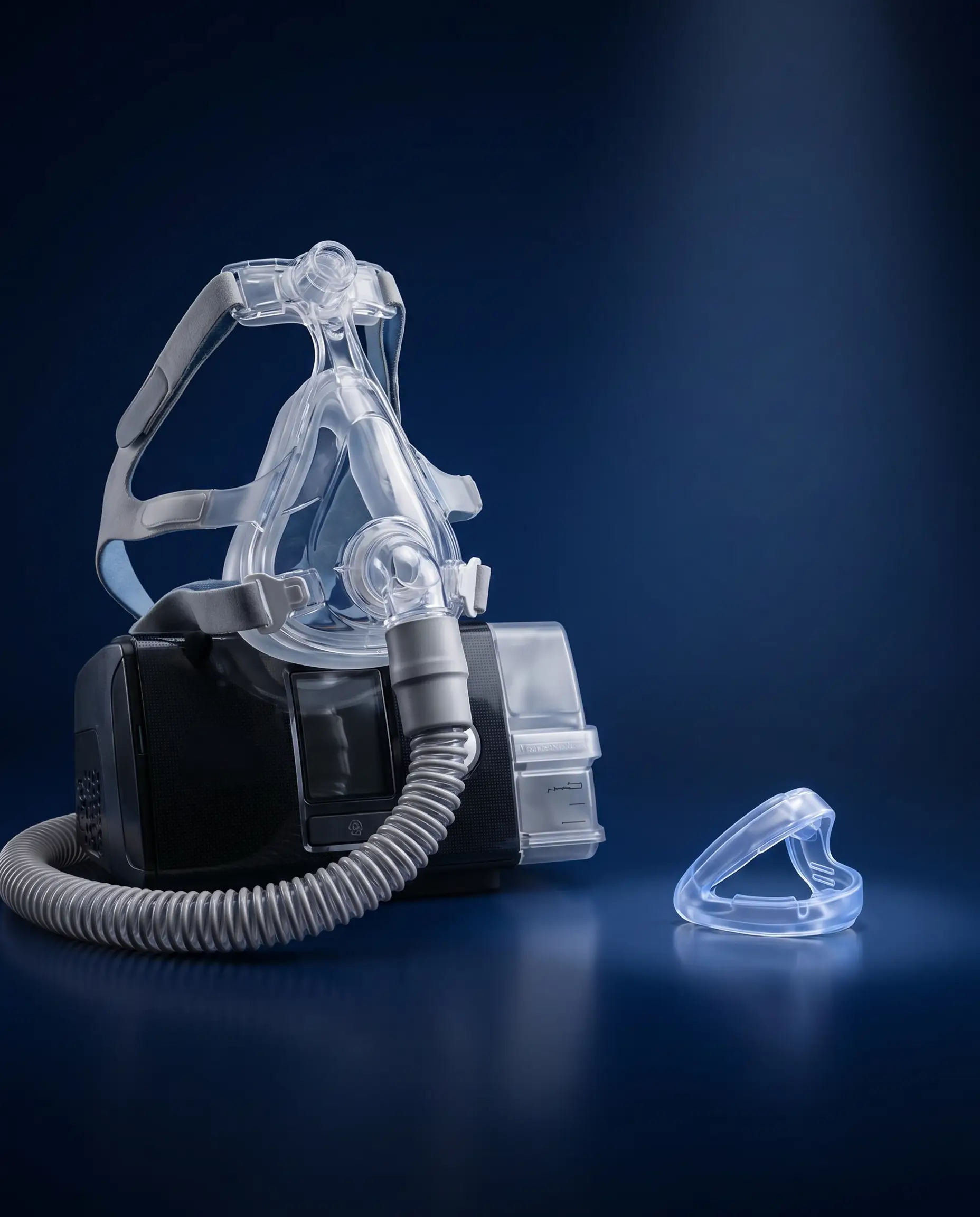
- A CPAP is the gold standard for diagnosed sleep apnea and it works. But it's a mask, a hose, and a machine, and long-term use is notoriously low. A lot of snorers refuse it before they'll even try.
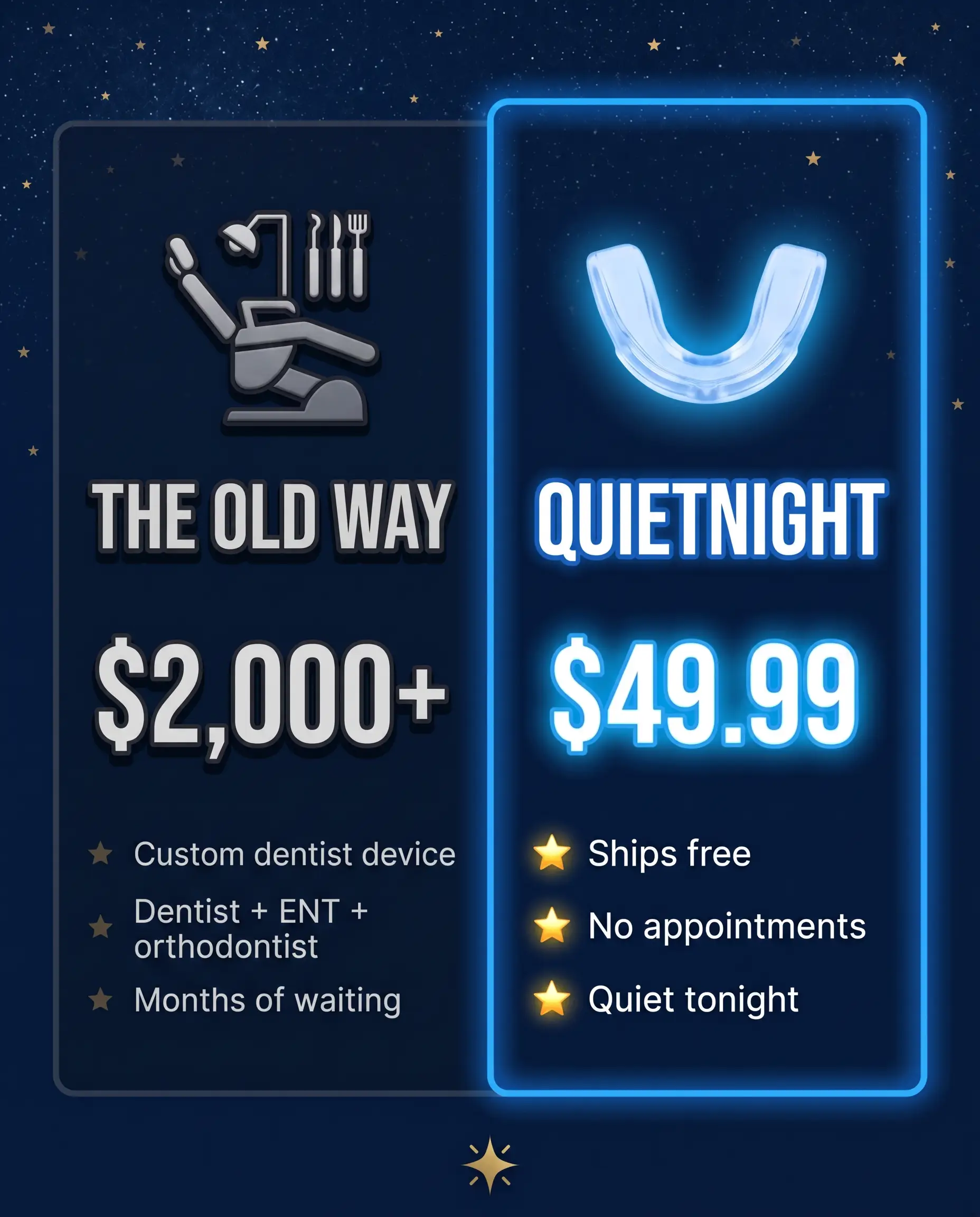
- A custom appliance from a sleep dentist works well and targets the true cause, but it typically costs $1,500 to $3,000 and takes several visits.
So it was never that you didn't try hard enough. Almost everything on that list was aimed at the nose, aimed at your ears, or aimed at the right place but too uncomfortable to keep using.
What Actually Works, and Why
If the airway collapses because the jaw and tongue fall backward, then the fix has to do the opposite. It has to move the lower jaw forward and hold it there through the night.
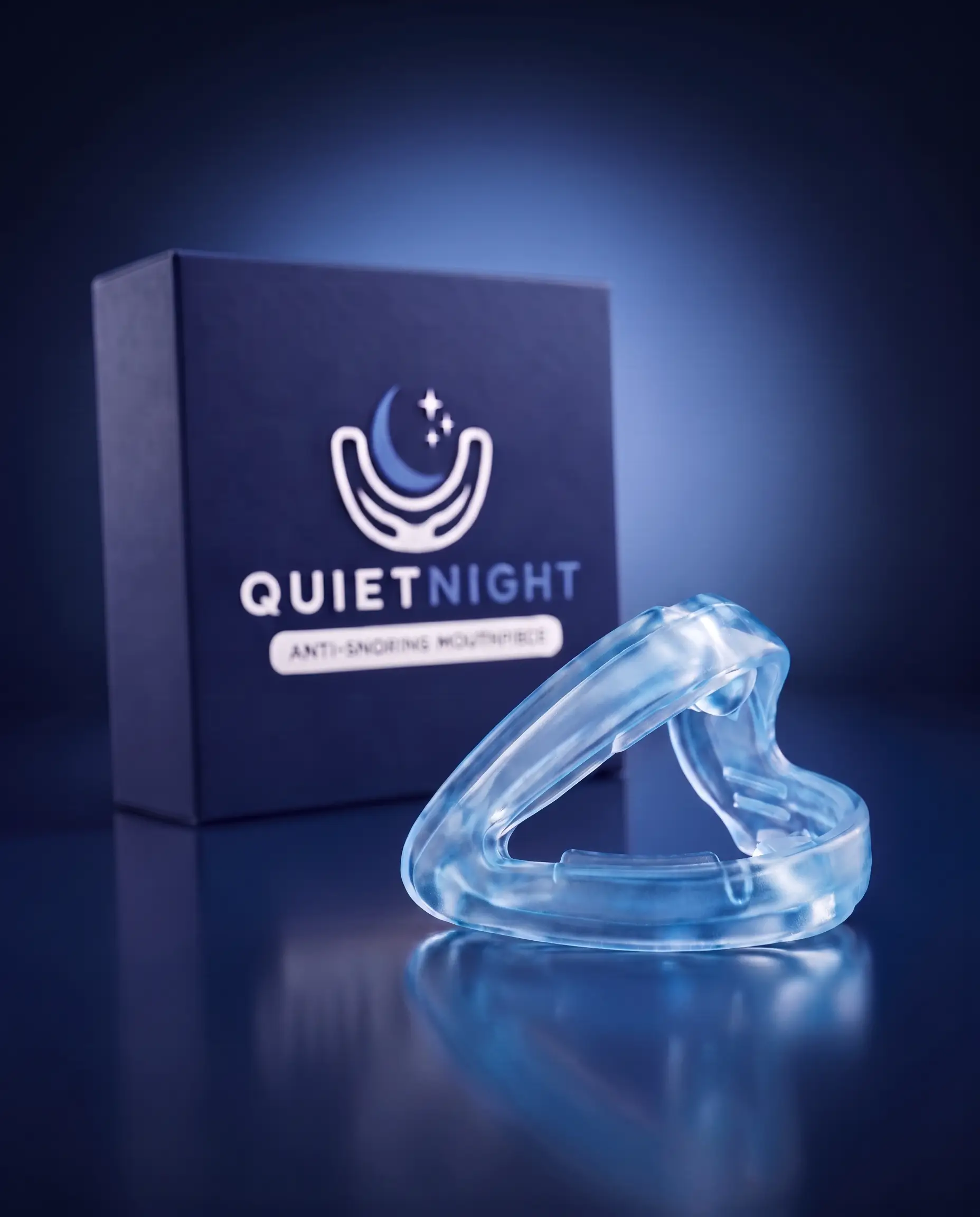
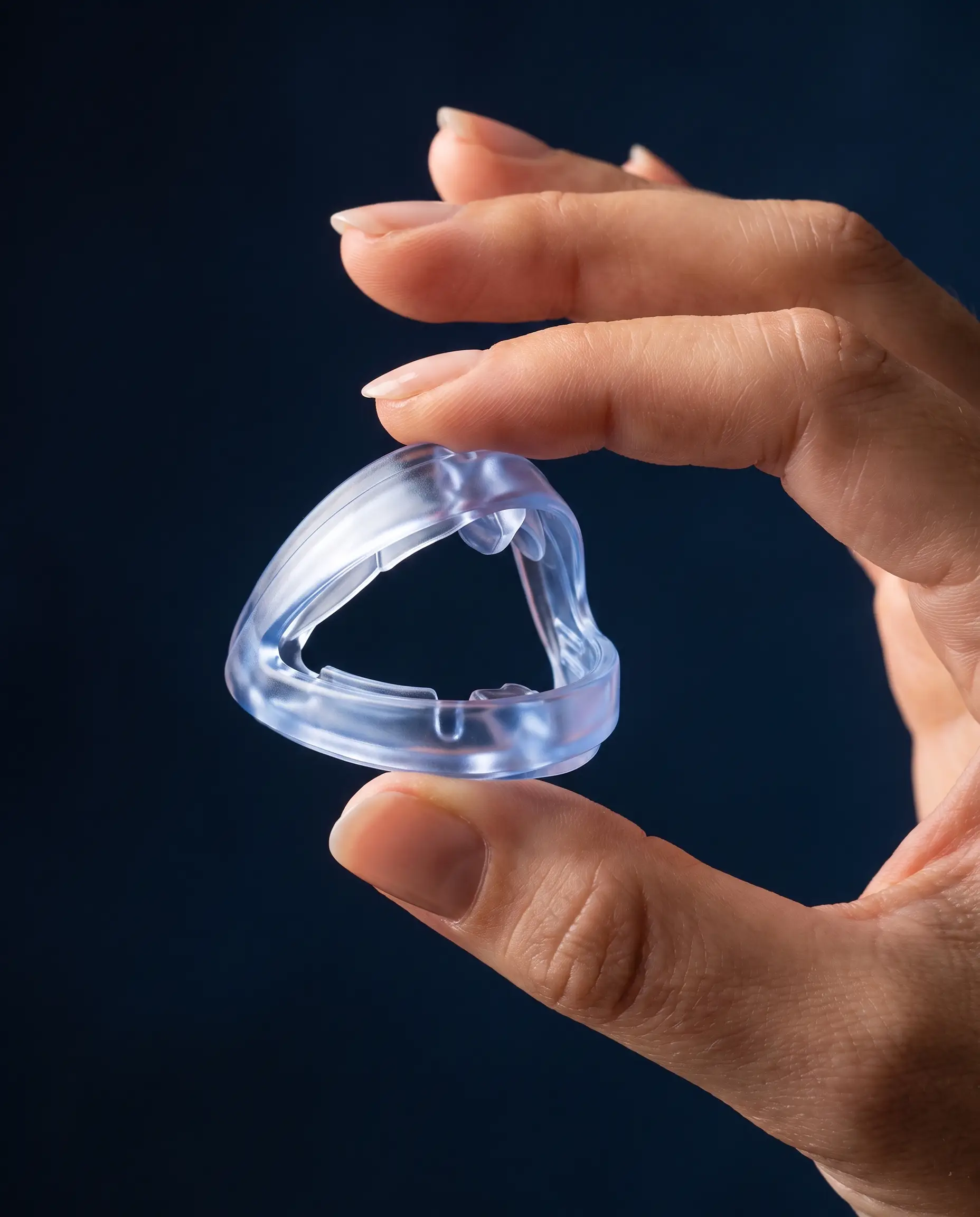
This is called mandibular advancement. “Mandible” is just the medical term for the lower jaw. A mandibular advancement device is a mouthpiece that gently repositions the lower jaw a few millimeters forward during sleep. And because the base of the tongue is anchored to the jaw, moving the jaw forward brings the tongue forward with it. That reopens the space behind the tongue and keeps the airway from collapsing, so the tissue can't vibrate, and the snoring stops at its source.
This is not a fringe idea. Mandibular advancement is a standard, well-studied treatment in dental sleep medicine. The clinical guidelines from the American Academy of Sleep Medicine and the American Academy of Dental Sleep Medicine recommend these devices for snoring, and for patients with mild-to-moderate sleep apnea who can't tolerate, or would rather not use, a CPAP.
And there's a practical reason they succeed where a CPAP often doesn't: patients actually keep using them. A treatment only works if it's worn every night. A small, comfortable mouthpiece asks very little: no mask, no machine, no appointment. He simply puts it in.
The Catch, and Where a Good Device Fits
Here's the real-world problem. The most effective appliances are either expensive and made in a dental office, or cheap and too uncomfortable to keep wearing. That leaves a gap in the middle.
That gap is where a well-made, adjustable, over-the-counter device belongs. When a patient asks what to try before committing to a custom lab appliance (especially when a partner won't consider CPAP), a device like QuietNight is the kind I point to.
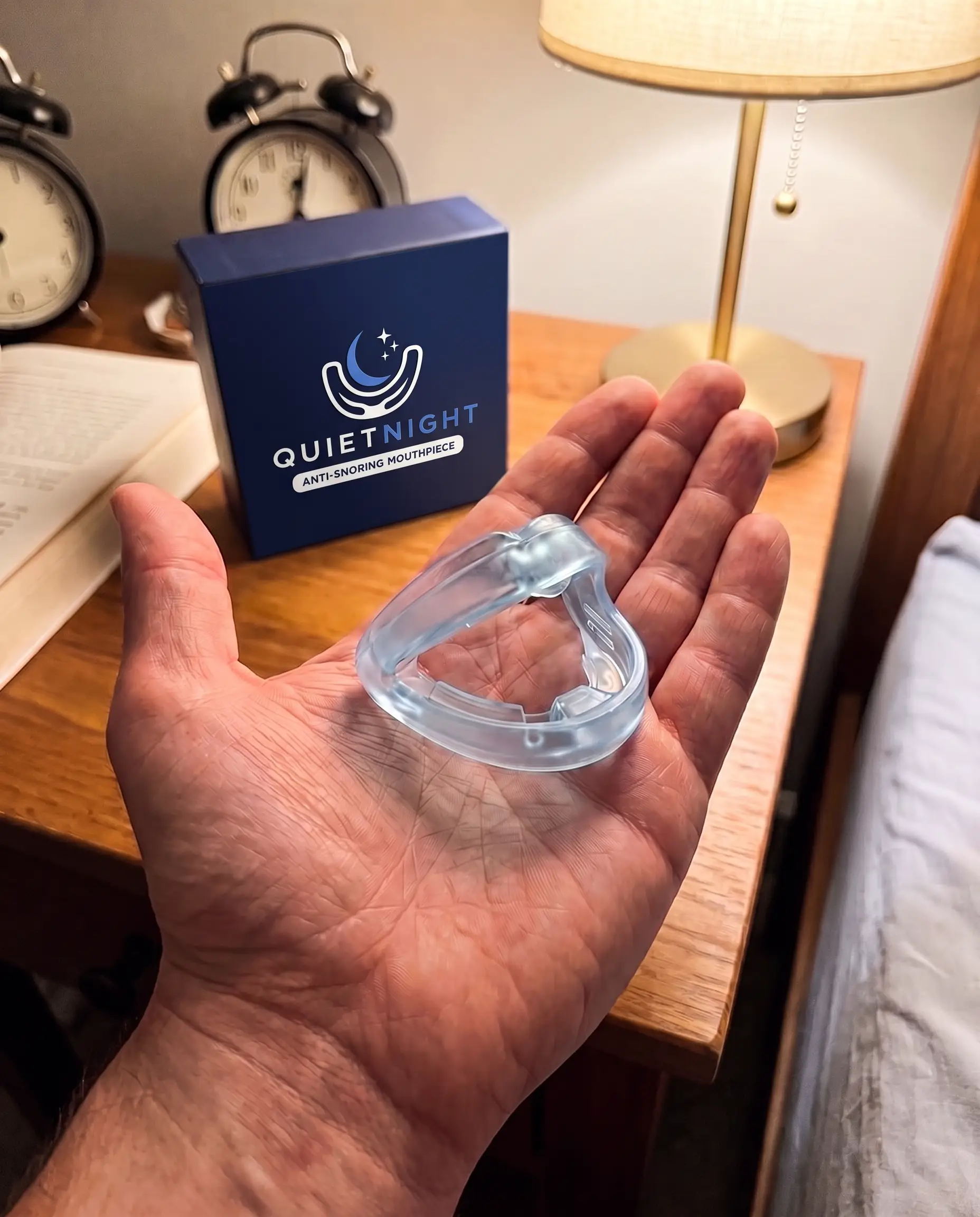
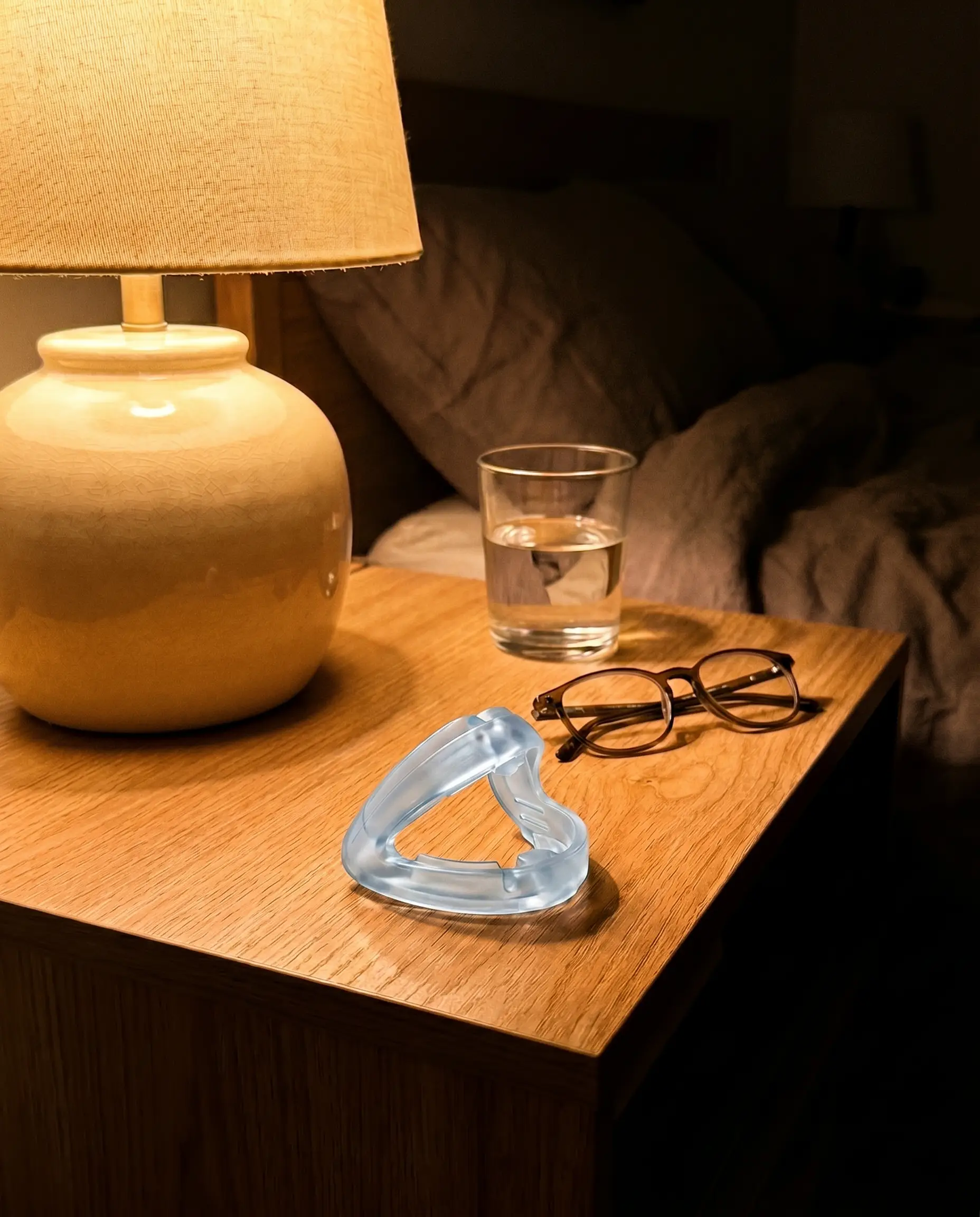
It's a slim mandibular advancement mouthpiece. From a clinical standpoint, a few things matter:
- ✓It's slim, low-profile, and ready to use. No boiling, no molding, no fitting steps. You take it out of the box, and he puts it in. That slim design is what makes it comfortable enough to actually sleep in, and having nothing to set up is part of the point. Across the category, discomfort and hassle are the top reasons people give up on a mouthpiece, and a device only works on the nights he actually wears it. The easier it is to live with, the more likely he is to keep it in.
- ✓It's FDA-cleared and made in the USA. That's a genuine clearance, not an unregulated import.
How the Options Compare
| Custom dental appliance | CPAP | Drugstore boil-and-bite | QuietNight | |
|---|---|---|---|---|
| Targets the real cause (jaw + tongue collapse) | Yes | Yes (air pressure) | Yes | Yes |
| Comfortable enough to wear nightly | Yes (custom) | Mask + hose, often not | Bulky, one-size | Slim, comfortable to sleep in |
| Setup before first use | Impressions + several visits | Sleep study + fitting | Boil-and-bite molding | Ready to use, nothing to fit |
| Needs a doctor or appointment | Yes | Yes (sleep study + Rx) | No | No |
| Mask or machine | No | Yes | No | No |
| Cost | $1,500 to $3,000 | High | ~$40 | One-time, modest |
| Kept in use long-term | If pursued | Adherence is low | Usually abandoned fast | Very little to refuse; worn nightly |
A Sensible, Low-Risk Place to Start
QuietNight is running a limited-time 50% off (just $49.99), plus 2 free gifts, free shipping, and a 60-night money-back guarantee. One-time purchase, no subscription.
See QuietNight & the 60-Night Guarantee →★★★★★ FDA-cleared · Made in the USA · Free returns
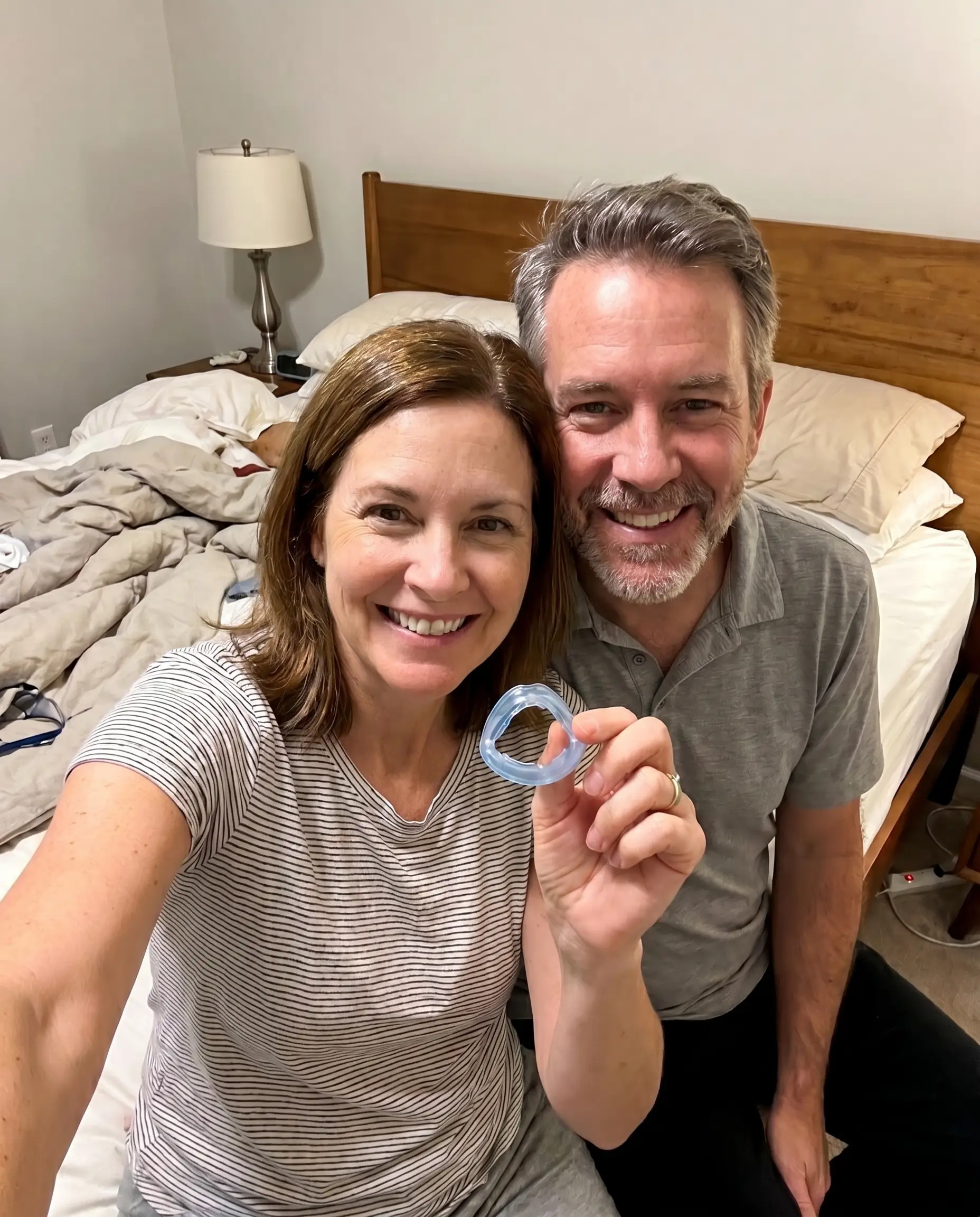
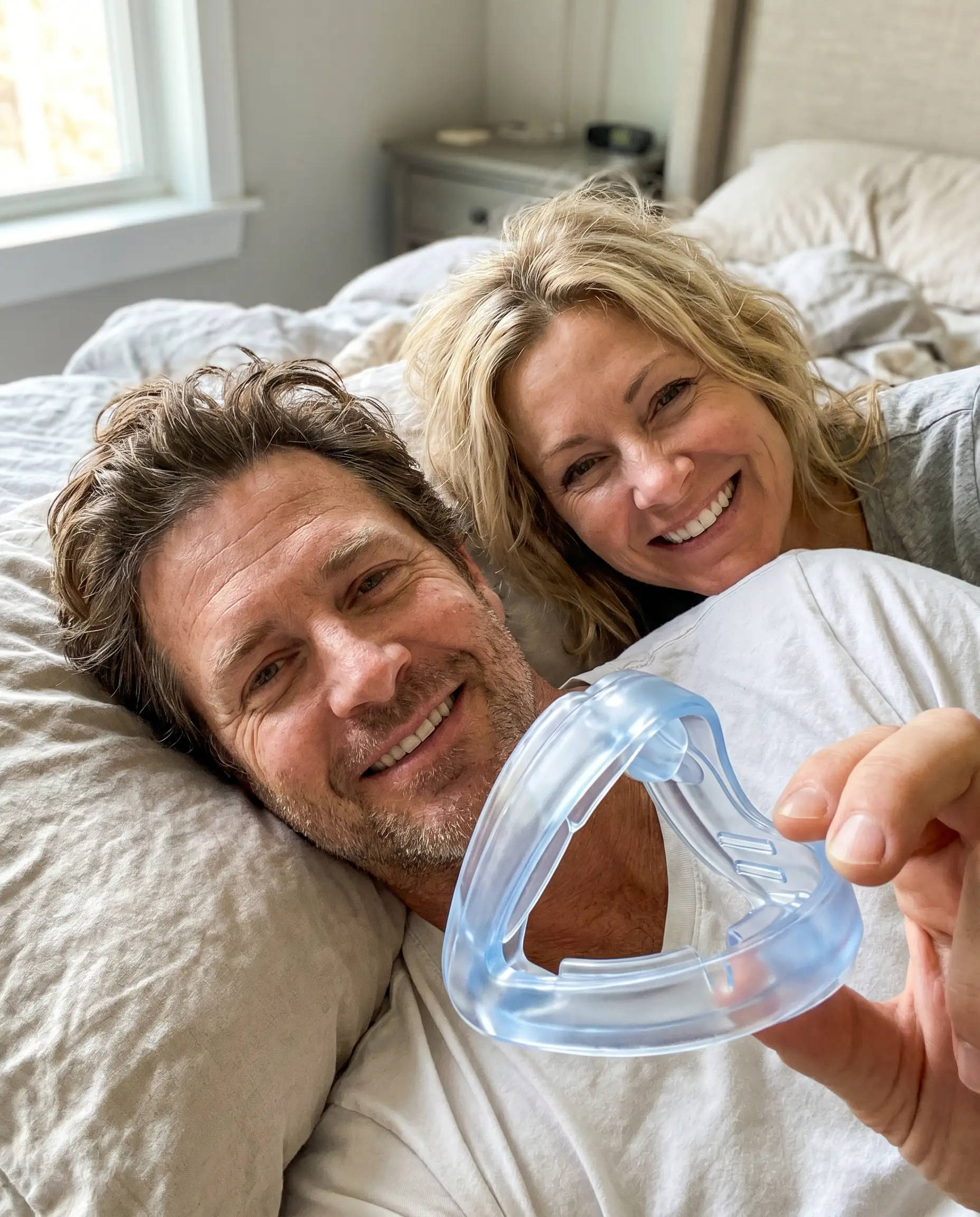
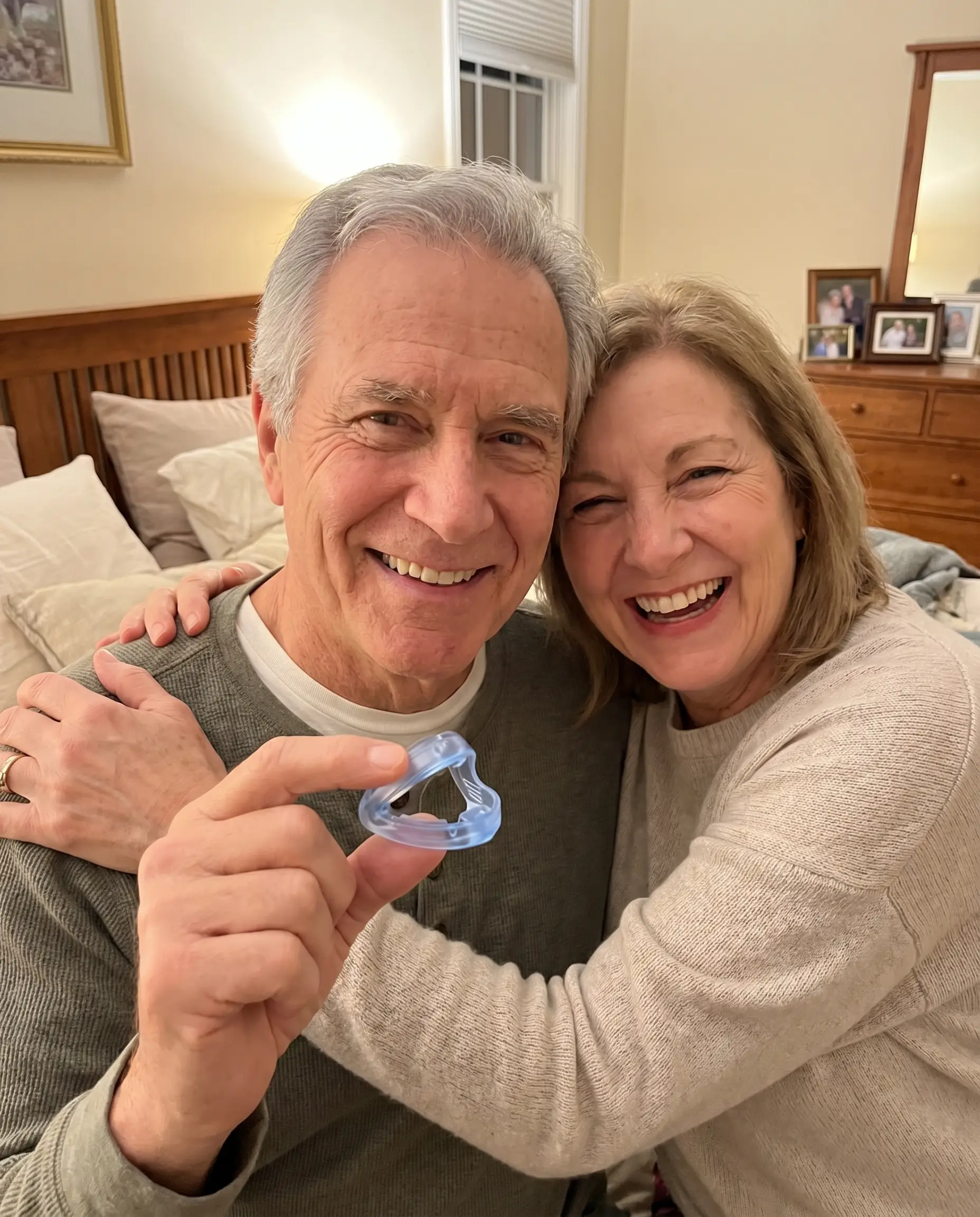
What QuietNight Customers Say
My Recommendation
If the strips, the sprays, and the earplugs never helped, it's because they were aimed at the wrong place. The cause is a collapsing airway in the throat. The treatment that addresses it is mandibular advancement: moving the lower jaw forward. For most people who snore, a slim, adjustable, FDA-cleared device like QuietNight is a sensible, low-risk place to start, and it's the kind of thing people are actually able to stick with.
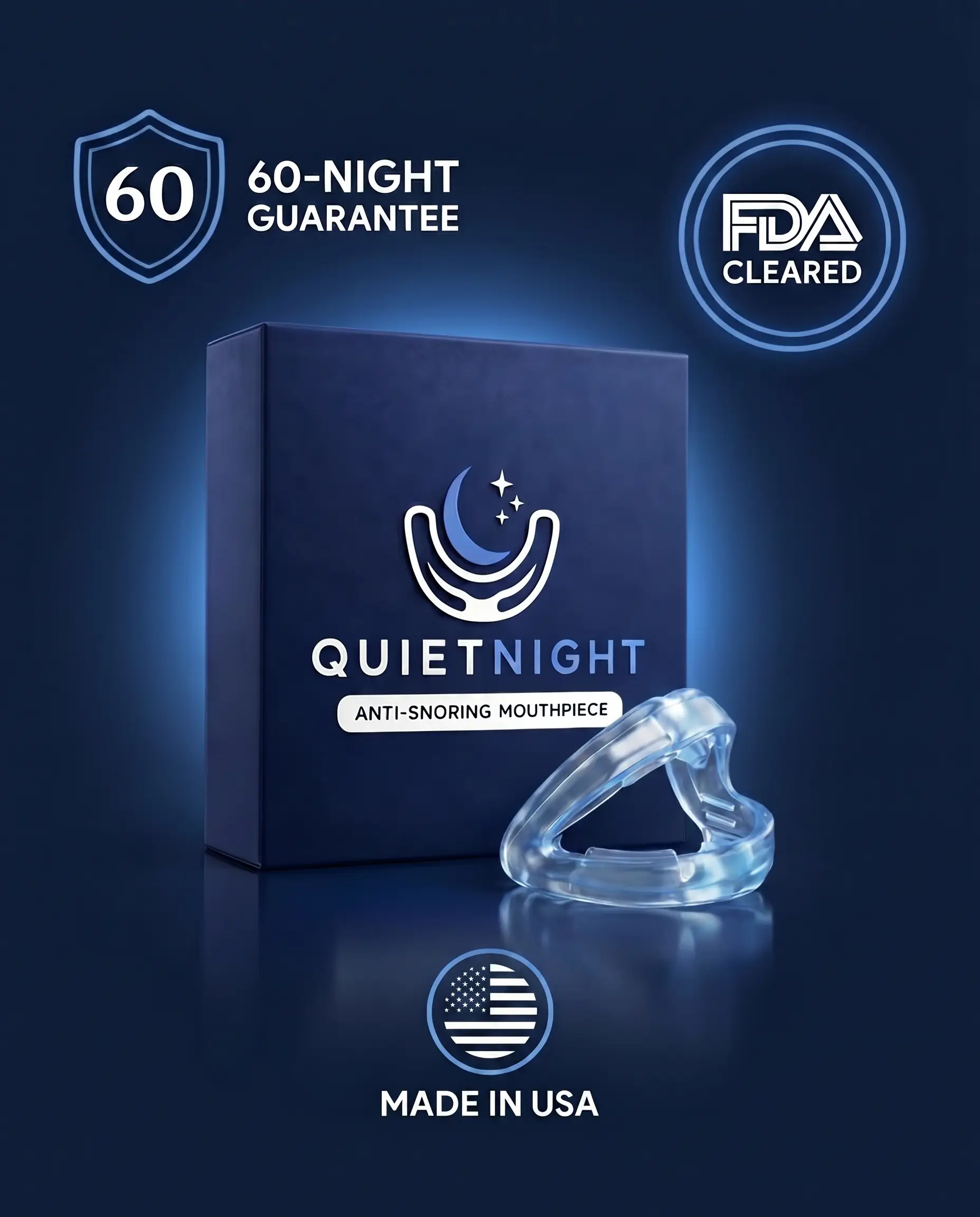
QuietNight is FDA-cleared, made in the USA, and backed by a 60-night money-back guarantee with free returns, so trying it costs nothing if it doesn't restore quiet sleep.
60 Nights, Risk-Free
Try QuietNight for a full 60 nights. If it doesn't restore quiet sleep, send it back for a full refund with free returns. Trying it costs nothing.
Learn More About QuietNight →★★★★★ 4.7/5 from 10,000+ verified customers
Quiet Nights Start Tonight
A slim, FDA-cleared mandibular advancement device, worn like a mouthguard. No mask, no machine, no appointment. Backed by a 60-night money-back guarantee.
Get QuietNight Risk-Free →50% off today · 2 free gifts · Free shipping · FDA-cleared
What People Are Saying









Snoring can be harmless, or it can be a symptom of obstructive sleep apnea. QuietNight is an FDA-cleared device intended to reduce snoring; it is not a treatment or cure for sleep apnea. If loud snoring is accompanied by gasping, choking, or pauses in breathing, consult a physician. Individual results vary. This is an advertisement. Dr. Bennett is a compensated advisor to QuietNight.
These statements have not been evaluated by the Food and Drug Administration. © 2026 QuietNight. All Rights Reserved.